Whole-House Filter Sizing Calculator
An undersized whole-house filter causes pressure drops, slow showers, and premature filter wear. Enter your home's fixtures and usage pattern to find the right GPM rating.
Your Home's Fixtures
Usage pattern
Sizing Recommendation
10.0
Total fixture GPM
6.0
Service flow GPM
9.0
Peak flow GPM
0.75"
Recommended port
How we calculated this: Your fixtures total 10.0 GPM if everything ran simultaneously. With a normal usage pattern (60% simultaneous use factor), your required service flow is 6.0 GPM. We recommend a system rated for at least 9.0 GPM peak (1.5x service flow) with 3/4" ports.
Compatible Whole-House Filters

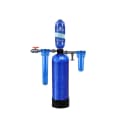
Aquasana Rhino WH-1000
7 GPM service · 0.75" port
Replacement filters: $148.00/yr
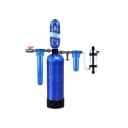
Aquasana Rhino Max Flow
14 GPM service · 14.5 GPM peak · 1" port
Replacement filters: $148.00/yr
Aquasana Rhino Well Water with UV
7 GPM service · 14.7 GPM peak · 1" port
Replacement filters: $248.00/yr
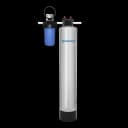
Pelican PC600
8 GPM service · 12 GPM peak · 0.75" port
Replacement filters: $65.00/yr
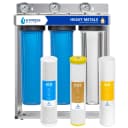
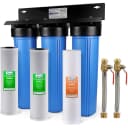
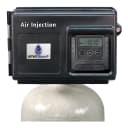
AFWFilters AIS10-25SXT
7 GPM service · 10 GPM peak · 1" port
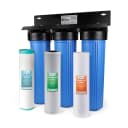
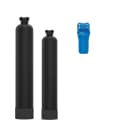
SpringWell CSF1 Combo
9 GPM service · 1" port
Replacement filters: $40.00/yr
* Tested to the standard by a third-party lab, not certified. Whole-house carbon systems reduce chlorine, taste and odor; for lead, PFAS or fluoride in drinking water add a certified point-of-use filter at the kitchen tap.
House GPM Calculator: How It Works
The tool above is a house GPM calculator: enter your fixtures and how many are likely to run at the same time, and it estimates your home's peak gallons-per-minute (GPM)demand, then recommends a whole-house filter flow rating sized to match. The number that matters is peak demand, not average daily use — a filter rated below your home's peak GPM is what causes the pressure drops and weak showers covered below.
What GPM Does a House Need? Quick Answer by Bathroom Count
For sizing a whole-house water filter, what matters is peak demand- the worst-case flow rate when multiple fixtures are likely to run simultaneously - not the home's average daily water use, which is much lower. The table below is the rule-of-thumb peak GPM range used by most plumbers and filter manufacturers for typical residential homes.
| Home size | Typical peak GPM | Recommended filter rating |
|---|---|---|
| 1 bathroom (small home, condo) | 5 - 7 GPM | 5 - 10 GPM |
| 2 bathrooms | 8 - 12 GPM | 10 GPM |
| 3 bathrooms | 10 - 15 GPM | 10 - 15 GPM |
| 4+ bathrooms / large household | 15 - 20 GPM | 15 - 25 GPM |
Ranges are typical residential peak demand; actual peak depends on simultaneous use patterns, irrigation, and outbuildings sharing the same supply.
Standard Residential Fixture Flow Rates (GPM)
The peak GPM number above is the sum of the fixtures most likely to be running at the same time. Federal law caps several residential fixtures, and EPA WaterSense-labeled products are stricter still. Use the rates below to size more precisely than the bathroom-count rule of thumb.
| Fixture | Federal max | WaterSense max | Typical actual |
|---|---|---|---|
| Showerhead | 2.5 GPM | 2.0 GPM | 2.0 - 2.5 GPM |
| Bathroom (lavatory) faucet | 2.2 GPM | 1.5 GPM | 1.5 - 2.2 GPM |
| Kitchen faucet | 2.2 GPM | 1.8 GPM | 1.8 - 2.2 GPM |
| Toilet refill | 1.6 gal/flush | 1.28 gal/flush | ~3 GPM during refill |
| Washing machine (fill) | - | - | 3 - 5 GPM |
| Dishwasher (fill) | - | - | 1 - 2 GPM |
| Outdoor hose bib (3/4") | - | - | 5 - 7 GPM |
How to Calculate Your Home's Peak GPM
Plumbing code uses the Hunter's Curve method with Water Supply Fixture Units (WSFU) to convert fixture counts into a probable peak demand. For sizing a whole-house filter, a simpler calculation is usually sufficient:
- Identify the fixtures most likely to run simultaneously during a busy morning or evening - typically one shower, one bathroom sink, one toilet refill, the kitchen sink, plus any active appliance.
- Sum the flow rates from the fixture table above.
- Add a 20% buffer to account for irrigation, hose bibs, and pressure margin during peak season when supply pressure is at its lowest.
A worked example: shower (2.5) + bathroom sink (1.5) + toilet refill (3) + kitchen sink (2.2) = 9.2 GPM, plus 20% buffer = ~11 GPM. A 10 GPM whole-house filter is borderline; a 12-15 GPM cartridge is the safer choice for this household. The calculator at the top of this page automates the same logic.
Why Filter Sizing Matters: Pressure, Wear, and Channeling
A filter rated below your home's peak demand causes three problems:
- Pressure drop.When peak GPM exceeds the filter's rating, the filter restricts flow. This shows up as noticeably weaker showers, slow tub fills, and noticeable interaction between fixtures (turning on the kitchen sink reduces shower pressure). Standard residential supply pressure is 40 to 80 psi; pressure drops at the filter beyond a few psi during peak use indicate undersizing.
- Premature filter wear.Cartridges run beyond their rated flow develop channeling - water finds the path of least resistance through the media, and the rest of the filter doesn't do useful work. This shortens cartridge life by 30 to 50 percent and reduces contaminant removal.
- Pressure-loss compounding.Most sediment-loaded filters lose pressure as they clog. An undersized filter starts with marginal headroom and reaches the "change cartridge" threshold much faster than a properly sized one would.
Sizing one rating up is almost always cheaper than sizing one rating down. A 15 GPM cartridge in a 10 GPM home costs a bit more upfront but lasts longer, holds pressure under any realistic peak, and gives headroom if household occupancy or fixture count grows.
Common Whole-House Filter Sizes
Whole-house filter housings are commonly sold by cartridge size, which determines the maximum sustained flow rate before significant pressure drop.
| Cartridge size | Typical flow rating | Best for |
|---|---|---|
| 10" standard (2.5" diameter) | 5 GPM | Apartments, condos, single-bath homes, point-of-entry pre-RO |
| 10" big blue (4.5" diameter) | 10 GPM | Most 2-3 bathroom homes; the most common residential size |
| 20" big blue (4.5" diameter) | 15 - 20 GPM | 3+ bathroom homes, well water with heavy sediment, longer cartridge life |
| Tank-style backwashing | 10 - 25+ GPM | Whole-house GAC, KDF, or media systems for chlorine, taste/odor, iron |
Flow ratings are typical manufacturer specs at 60 psi inlet; check the specific product's published service flow rate before purchasing.
Frequently Asked Questions
What is the average GPM for a typical house?
Peak demand for a 1-bathroom home is roughly 5 to 7 gallons per minute (GPM). A 2-bathroom home is typically 8 to 12 GPM, a 3-bathroom home 10 to 15 GPM, and 4+ bathroom homes 15 to 20 GPM. These are peak overlap rates - the worst-case demand when multiple fixtures run at once. The average daily flow rate is far lower, but a whole-house water filter must be sized for peak demand to avoid pressure drops.
How do I calculate peak GPM for my home?
Add up the flow rates of fixtures most likely to run simultaneously - typically one shower (2.0 to 2.5 GPM), one bathroom sink (1.5 to 2.2 GPM), one kitchen sink or toilet refill (2.2 to 3 GPM), and any active appliance fill (washing machine 3 to 5 GPM, dishwasher 1 to 2 GPM). For more rigorous sizing, plumbing codes use Water Supply Fixture Units (WSFU) and Hunter's Curve to translate fixture counts into a probable peak demand.
What size whole-house water filter do I need for a 3-bedroom house?
Most 3-bedroom, 2-bathroom homes are well served by a 10 GPM whole-house filter cartridge. If the home has 3 or more bathrooms, frequent overlapping use, or a separate irrigation circuit on the same supply line, step up to a 15 to 20 GPM system to avoid pressure drop during peak demand.
What is the difference between water flow rate (GPM) and water pressure (PSI)?
Flow rate (gallons per minute) measures how much water moves through a pipe over time. Pressure (pounds per square inch) measures the force pushing the water. Both matter for residential supply, but they are independent: a high-pressure line can still deliver low flow if the pipe or filter is undersized. A correctly sized whole-house filter is one that does not significantly reduce flow at the home's peak demand while pressure stays within the typical 40 to 80 psi residential range.
Will an undersized whole-house filter cause low water pressure?
Yes. When peak demand exceeds the filter's rated GPM, pressure drops as the filter restricts flow - this shows up as weak showers, slow appliance fills, or two fixtures noticeably affecting each other. It also forces the filter cartridge to work harder, which causes channeling and shortens cartridge life. The standard fix is to upsize the filter housing or add a parallel cartridge configuration.
What are standard residential fixture flow rates?
Federal maximums under the Energy Policy Act of 1992 cap showerheads at 2.5 GPM and bathroom faucets at 2.2 GPM. EPA WaterSense labeled fixtures are stricter: showerheads no more than 2.0 GPM, lavatory faucets no more than 1.5 GPM. Toilets are 1.6 gallons per flush since 1992 (~3 GPM during the brief refill cycle). Washing machines fill at 3 to 5 GPM, dishwashers at 1 to 2 GPM, and outdoor hose bibs typically deliver 5 to 7 GPM.
Sources
- EPA WaterSense Showerheads — flow rate specification (2.0 GPM max)
- EPA WaterSense Bathroom Faucets — lavatory faucet flow rate (1.5 GPM)
- DOE Best Management Practice #7: Faucets and Showerheads — federal flow rate standards
- EPA WaterSense Indoor Features Technical Reference - Bathroom Sink Faucets (PDF) — fixture flow methodology
Related Tools & Resources
Flow rate estimates based on standard fixture rates - consult a licensed plumber for precise sizing.