Chlorine (Free)
Category: disinfectant
Chlorine is intentionally added to virtually all US municipal drinking water as a disinfectant to control bacteria, viruses, and other pathogens. The EPA caps the residual concentration at a Maximum Residual Disinfectant Level (MRDL) of 4.0 mg/L (4 parts per million). Free chlorine itself is not the primary long-term health concern at typical residuals; the disinfection byproducts (DBPs) it forms when reacting with naturally occurring organic matter - particularly trihalomethanes - are.
EPA MCL
4 mg/L
Status
EPA Regulated
NSF Standard
NSF/ANSI 42
Health Effects
Eye and nose irritation, stomach discomfort at levels above the MRDL. Chlorine itself is not the primary concern - it is the disinfection byproducts (TTHMs, HAAs) formed when chlorine reacts with organic matter that pose greater health risks.
Where It Comes From
Added intentionally to drinking water as a disinfectant to kill bacteria, viruses, and other pathogens. The most widely used water disinfectant in the U.S.
Where It's Commonly Found
Present in virtually all U.S. public water systems that use chlorine disinfection. Typical residual levels at the tap range from 0.2–2.0 mg/L. Regulated as a Maximum Residual Disinfectant Level (MRDL), not a traditional MCL.
Intentionally present in the vast majority of U.S. public water systems. The EPA MRDL of 4.0 mg/L is rarely exceeded. Primary concern is taste/odor and formation of disinfection byproducts.
How to Remove It
Effective Technologies
- activated carbon
- carbon block
- KDF
- reverse osmosis
- distillation
Does NOT Remove It
- UV
- ion exchange
- ceramic
- mechanical filtration
What Is the EPA Maximum Residual Disinfectant Level (MRDL) for Free Chlorine?
Under the EPA's Stage 1 and Stage 2 Disinfectants and Disinfection Byproducts Rules, the Maximum Residual Disinfectant Level (MRDL) for free chlorine is 4.0 mg/L (also expressed as 4.0 ppm or 4 parts per million), measured as Cl2. The same 4.0 mg/L MRDL applies to chloramines (combined chlorine).
The MRDL is distinct from a traditional Maximum Contaminant Level (MCL). An MCL applies to unwanted contaminants; an MRDL applies to a substance intentionally added for a public health purpose, in this case disinfection. The MRDL Goal (MRDLG) is also 4.0 mg/L - the EPA considers chlorine residual at or below this level safe for ongoing consumption.
Typical free chlorine residuals at the customer's tap range from 0.2 to 2.0 mg/L, well below the MRDL. Public water systems are required to maintain a detectable disinfectant residual throughout the distribution system to suppress regrowth of bacteria.
Free Chlorine vs. Chloramine: What's the Difference?
Free chlorine is elemental chlorine (Cl2), hypochlorous acid (HOCl), or hypochlorite ion (OCl-) - the active disinfectant directly added to most water supplies. It is highly reactive, fast-acting, and easy for activated carbon filters to remove.
Chloramines (the combined chlorine residual) are formed when free chlorine is intentionally combined with ammonia. Many large utilities switched from free chlorine to chloramine in the distribution system because chloramine produces fewer disinfection byproducts and persists longer in long pipe runs. Chloramines are slower to react with carbon and require longer filter contact time or specifically catalytic activated carbon to remove effectively.
Both free chlorine and chloramines fall under the same 4.0 mg/L EPA MRDL. To know which your utility uses, check the annual Consumer Confidence Report (CCR) - it's required to disclose the disinfectant.
Disinfection Byproducts: The Bigger Long-Term Concern
When free chlorine reacts with naturally occurring organic matter in source water - dissolved leaf tannins, soil humic acids, algal byproducts - it produces a family of compounds called disinfection byproducts. The two regulated groups are total trihalomethanes (TTHMs: chloroform, bromodichloromethane, dibromochloromethane, and bromoform) and five haloacetic acids (HAA5).
EPA regulates TTHMs at an MCL of 80 µg/L and HAA5 at 60 µg/L. Long-term exposure to elevated DBPs has been associated in epidemiological studies with increased risk of bladder cancer, and is regulated for that reason. DBP formation is greater in surface-water systems with higher organic loading and in summer months when source water is warmer.
This is the case for using a point-of-use carbon filter even when your tap chlorine is well below the MRDL: removing the chlorine residual itself addresses taste and odor, but more importantly, certified carbon filters also reduce trihalomethanes and other volatile disinfection byproducts.
How to Remove Chlorine from Drinking Water
Activated carbon - either granular activated carbon (GAC) or, more effectively, dense carbon block - is the standard residential treatment for chlorine. Free chlorine is reduced via a chemical reaction at the carbon surface; well-designed carbon filters reduce free chlorine residual by more than 95% on contact.
For chloramine, standard activated carbon works much more slowly and may be insufficient at typical residential flow rates. Catalytic activated carbon - GAC processed to enhance its surface chemistry - removes chloramines effectively, as do certain whole-house systems with extended contact tanks.
Other methods that remove chlorine: KDF media (catalytic redox media often paired with carbon), reverse osmosis (the carbon prefilter does the work; the RO membrane itself is intolerant of chlorine and must be protected from it), and distillation. UV light, ion exchange, ceramic filtration, and standard mechanical filters do not reduce chlorine.
Boiling water for 15 to 20 minutes drives off most free chlorine via volatilization, and simply leaving an open container on the counter overnight reduces it substantially. Boiling does not remove chloramines, dissolved minerals, or DBPs effectively.
Filter Certifications for Chlorine and Disinfection Byproducts
Two NSF/ANSI standards are relevant. NSF/ANSI 42 covers "aesthetic effects" including chlorine taste and odor reduction - this is the baseline certification on most point-of-use carbon filters. NSF/ANSI 53 covers "health effects" and includes specific tested claims for trihalomethane reduction and other VOCs; filters certified to NSF/ANSI 53 for VOC reduction are tested at much stricter performance levels.
If your priority is taste only, NSF/ANSI 42 is sufficient. If you want verified reduction of trihalomethanes and other DBPs, look specifically for an NSF/ANSI 53 certification covering VOCs or a manufacturer claim of TTHM reduction backed by independent test data.
Confirm any filter's specific claims on the NSF Certified Drinking Water Treatment Units database (link below). General "NSF certified" labeling on packaging is not sufficient - the database listing tells you exactly which contaminants the filter has been tested against and at what performance level.
Frequently Asked Questions
What is the EPA Maximum Residual Disinfectant Level for free chlorine?
The EPA's Maximum Residual Disinfectant Level (MRDL) for free chlorine is 4.0 mg/L, measured as Cl2 - equivalent to 4 parts per million. The same 4.0 mg/L MRDL applies to chloramines. The MRDL is set under the Stage 1 and Stage 2 Disinfectants and Disinfection Byproducts Rules. The MRDL Goal is also 4.0 mg/L, meaning the EPA considers residuals at or below that level safe.
What level of chlorine is safe in drinking water?
Up to 4.0 mg/L (4 ppm) per the EPA. Typical free chlorine residuals at the tap in US public water systems range from 0.2 to 2.0 mg/L, well below the regulatory limit. The CDC states that chlorine levels at or below 4 mg/L are unlikely to cause harmful health effects from typical drinking water consumption.
Does activated carbon remove chlorine from water?
Yes. Activated carbon (GAC and carbon block) reduces free chlorine residual by more than 95% on contact via a surface chemical reaction. This is one of the best-established uses of carbon in residential water treatment and is the basis of most pitcher, faucet-mount, and under-sink filters certified to NSF/ANSI 42 for chlorine taste and odor reduction.
What removes chloramine from drinking water?
Catalytic activated carbon is the standard treatment for chloramine; ordinary activated carbon works much more slowly and may not be adequate at residential flow rates. Whole-house systems with extended carbon contact tanks also remove chloramine effectively. Reverse osmosis systems with a properly sized chloramine-rated carbon prefilter address it as well.
What are trihalomethanes (THMs) and why do they matter?
Trihalomethanes are a group of disinfection byproducts - chloroform, bromodichloromethane, dibromochloromethane, and bromoform - formed when free chlorine reacts with naturally occurring organic matter in source water. The EPA regulates total trihalomethanes (TTHMs) at a Maximum Contaminant Level of 80 µg/L. Long-term exposure to elevated TTHMs has been associated with increased bladder cancer risk in epidemiological studies, which is why they are regulated.
Does boiling water remove chlorine?
Yes for free chlorine. Boiling water for 15 to 20 minutes (or simply letting it stand uncovered overnight) drives off most free chlorine through volatilization. Boiling does not effectively remove chloramines, disinfection byproducts, dissolved minerals, or heavy metals.
Cited Sources
- Stage 1 and Stage 2 Disinfectants and Disinfection Byproducts Rules — US EPA
- National Primary Drinking Water Regulations — US EPA
- Maintaining a Disinfectant Residual — US EPA
- About Water Disinfection with Chlorine and Chloramine — CDC
- NSF/ANSI 42, 53 and 401 Filtration Systems Standards — NSF
- NSF Certified Drinking Water Treatment Units Database — NSF
Filters That Address Chlorine (Free)
38 filters in our database list Chlorine (Free) reduction.
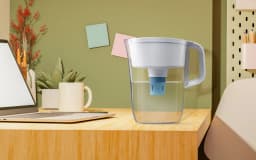
Brita Tahoe Elite
pitcher
$41.99
$39.98/yr filters
Price checked Apr 2026
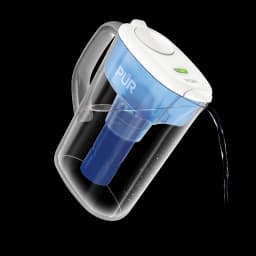
PUR PLUS 7-Cup
pitcher
$21.74
$59.94/yr filters
Price checked Apr 2026
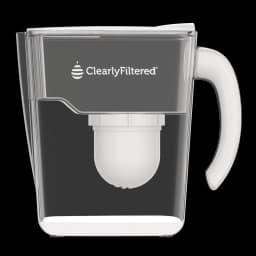
Clearly Filtered Pitcher
pitcher
$90
$165/yr filters
Price checked Apr 2026
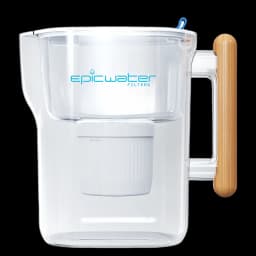
Epic Water Filters Pure Pitcher
pitcher
$84
$212/yr filters
Price checked Sep 2026
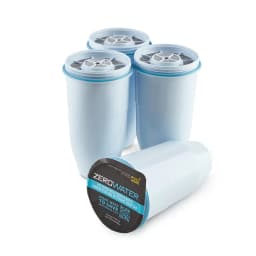
ZeroWater 10-Cup
pitcher
$34.99
$107.94/yr filters
Price checked Apr 2026
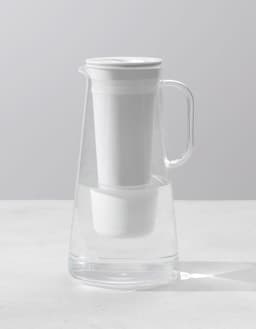
LifeStraw Home 7-Cup
pitcher
$44.95
$126.65/yr filters
Price checked Apr 2026
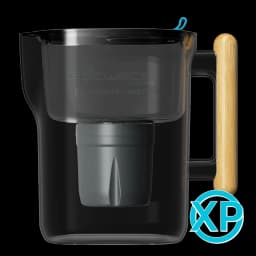
Epic Water Filters Nano
pitcher
$82
$138/yr filters
Price checked Apr 2026
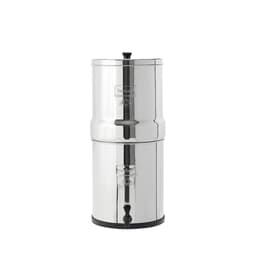
Berkey Big Berkey
gravity
$367
$10/yr filters
Price checked Apr 2026
Official Sources
Related Contaminants
Learn More
Check if Chlorine (Free) is in your water
Enter your ZIP code to see local water quality data and get matched with the right filter.
Enter Your ZIP Code →Informational guidance based on EPA data and NSF standards - not medical advice.