Iron
Category: inorganic
Rust-colored stains in your sink, orange-tinted water, or a metallic taste are the classic signs of iron in well water. It's the most common nuisance contaminant well owners deal with — and, reassuringly, it's an aesthetic problem rather than a health hazard at typical levels. The right fix depends on which form of iron you have, which is why a water test comes before any purchase.
EPA MCL
Not regulated
Status
Unregulated
NSF Standard
NSF/ANSI 42 (aesthetic effects)
Health Effects
Iron is an aesthetic (nuisance) contaminant, not a health hazard at the levels typically found in drinking water. The EPA regulates it only under a non-enforceable Secondary Maximum Contaminant Level (SMCL) of 0.3 mg/L, set for taste, color, and staining rather than for health. It causes a metallic taste and rust-colored staining of fixtures, laundry, and dishes.
Where It Comes From
Naturally occurring — iron dissolves into groundwater from soil and rock, and can also come from corroding iron or steel plumbing. It appears as dissolved 'ferrous' (clear-water) iron that turns orange after standing, oxidized 'ferric' (red-water) iron with visible particles, or organic/bacterial iron.
Where It's Commonly Found
Private wells and groundwater supplies, and older homes with iron or galvanized-steel plumbing. One of the most common complaints among private-well owners.
Iron is among the most frequently reported well-water problems in the U.S. Roughly 43 million Americans rely on private wells, which are not regulated under the Safe Drinking Water Act — testing and treatment are the owner's responsibility.
How to Remove It
Effective Technologies
- oxidation filtration
- water softener
- ion exchange
- mechanical filtration
- reverse osmosis
Does NOT Remove It
- UV
- activated carbon
- carbon block
Is iron in water bad for you?
At the levels typically found in drinking water, iron is not considered a health risk. The EPA regulates it only with a Secondary Maximum Contaminant Level (SMCL) of 0.3 mg/L — a non-enforceable guideline based on aesthetics (taste, color, and staining), not on health effects. Health-based contaminants like lead or arsenic carry enforceable primary standards; iron does not.
That said, iron is genuinely unpleasant above about 0.3 mg/L: it gives water a metallic taste, stains sinks, tubs, toilets, laundry, and dishes a rust-orange to brown color, and can build up in plumbing and appliances. Iron can also feed 'iron bacteria,' which create a reddish slime and worsen taste and odor. Removing it is about water quality and protecting fixtures, not about treating a health threat.
Ferrous vs ferric iron — why the type decides the fix
Iron shows up in three forms, and the form dictates the treatment. Ferrous iron (Fe2+), often called 'clear-water iron,' is fully dissolved — water looks clear from the tap but turns orange and cloudy after sitting as the iron oxidizes. Ferric iron (Fe3+), or 'red-water iron,' has already oxidized into visible rust-colored particles. Organic and bacterial iron is bound to organic matter or produced by iron bacteria, appears yellow-brown, and is the hardest to treat.
Because these behave so differently, a water test that identifies the form and concentration of iron (and checks for co-occurring manganese, hardness, and pH) is the necessary first step. Buying equipment before testing is the most common and most expensive mistake.
How to remove iron, by level and type
For low levels of dissolved ferrous iron (roughly up to 3-5 mg/L, depending on the unit), a cation-exchange water softener can remove it along with hardness. For higher levels or for ferric iron, oxidation followed by filtration is the standard approach — air-injection (AIO) systems or oxidizing media such as manganese greensand or Katalox convert dissolved iron to filterable particles and trap them. A sediment pre-filter ahead of any system catches ferric particles and protects the downstream media.
Iron bacteria require a different tack: shock chlorination of the well plus filtration, sometimes repeated. Reverse osmosis will remove iron at the point of use for drinking water, but iron fouls RO membranes quickly, so it's a finishing step for already-low iron, not the primary whole-house solution. Whatever you choose, match the equipment to your tested iron level and form, and verify any product's iron-reduction claim against its NSF/ANSI 42 certification.
Sizing and buying the right system
Whole-house iron treatment is sized to your water's iron concentration, your household's peak flow rate (gallons per minute), and the presence of manganese, hardness, or low pH, which affect which media and settings work. Our well-water planner and whole-house sizing tool can help you estimate flow needs and narrow the system type before you shop, and the contaminant matcher maps tested problems to certified filter categories.
Because private wells are unregulated, plan on an annual water test, and re-test after any change in taste, color, or odor. If iron comes with a rotten-egg smell, you likely also have hydrogen sulfide, which an oxidation-filtration system can often address at the same time.
Frequently Asked Questions
How much iron in well water is too much?
The EPA's secondary standard is 0.3 mg/L — above that, most people notice a metallic taste and rust-colored staining. It's an aesthetic guideline rather than a health limit, but 0.3 mg/L is the practical threshold where treatment becomes worthwhile. A lab test gives you the exact concentration and form.
Will a water softener remove iron?
A cation-exchange softener can remove low levels of dissolved ferrous (clear-water) iron — generally up to a few mg/L — along with hardness. It is not designed for ferric (already-oxidized) iron, iron bacteria, or high concentrations, which need oxidation plus filtration. Check the softener's rated iron capacity, and don't rely on a softener as a dedicated iron filter for heavy iron.
Why is my well water orange or rusty?
Orange or rusty water is oxidized (ferric) iron — either iron that was already particulate at the source, or dissolved ferrous iron that oxidized on contact with air. If the water is clear at the tap but turns orange after sitting in a glass, you have ferrous iron oxidizing; if it's orange straight from the tap, it's ferric. Corroding iron plumbing can also add rust color.
Does reverse osmosis remove iron?
Reverse osmosis does reduce iron at the point of use, but iron — especially oxidized ferric iron — fouls and clogs RO membranes quickly. RO is best used as a final drinking-water step after iron has already been reduced, not as the primary whole-house iron treatment. For whole-house iron, oxidation-filtration or a softener (for low ferrous iron) is the appropriate method.
How do I test for iron in my well water?
Use a certified laboratory test (state-certified labs and mail-in kits are widely available) that reports total iron and, ideally, distinguishes ferrous from ferric iron and checks manganese, hardness, and pH. Testing before buying equipment is essential because the iron's form and level determine which treatment will work. The EPA recommends testing private wells at least annually.
Is iron staining permanent?
Iron stains on fixtures and laundry can be hard to remove once set, but they're caused by the water, not the surfaces — treat the water and new staining stops. For existing stains, use a rust-specific (oxalic- or citric-acid-based) cleaner rather than chlorine bleach, which can set iron stains darker.
Cited Sources
Filters That Address Iron
2 filters in our database list Iron reduction.
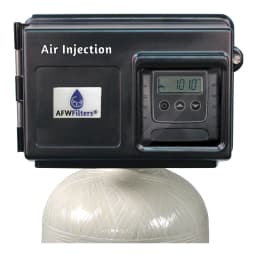
AFWFilters AIS10-25SXT
whole house
$1399
Price checked Sep 2026
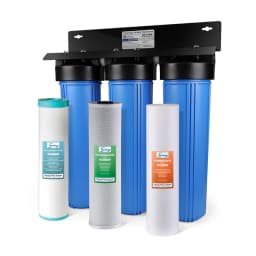
iSpring WGB32BM
whole house
$470
$130/yr filters
Price checked Jun 2026
Official Sources
Related Contaminants
Learn More
Check if Iron is in your water
Enter your ZIP code to see local water quality data and get matched with the right filter.
Enter Your ZIP Code →Informational guidance based on EPA data and NSF standards - not medical advice.