TDS (Total Dissolved Solids)
Category: inorganic
Cheap TDS meters have made 'total dissolved solids' one of the most misunderstood water numbers. The honest version: TDS is a taste-and-minerals measure, not a safety test. A low reading doesn't mean your water is clean, and a high reading usually just means more dissolved minerals. Here's how to read it without being misled.
EPA MCL
Not regulated
Status
Unregulated
NSF Standard
NSF/ANSI 58 (reverse osmosis, TDS reduction)
Health Effects
TDS (total dissolved solids) is the combined weight of all dissolved minerals, salts, and metals in water — an AGGREGATE AESTHETIC measure, not a health or safety indicator. The EPA's secondary standard of 500 mg/L is about taste, not health. Critically, a TDS meter does not detect specific harmful contaminants like lead, PFAS, nitrate, or bacteria, and high TDS is often just harmless dissolved minerals such as calcium and magnesium. Low TDS does not mean water is safe, and high TDS does not mean it is dangerous.
Where It Comes From
Dissolved minerals and salts picked up naturally as water moves through soil and rock (calcium, magnesium, sodium, bicarbonates, chlorides, sulfates), plus contributions from plumbing and treatment. It's measured cheaply with a handheld TDS/conductivity meter, which is why it's so often misunderstood.
Where It's Commonly Found
All natural water contains some TDS; levels vary widely by region and source. Hard-water and groundwater areas tend to run higher; some surface waters run low.
Universal — every water supply has a TDS value. The number alone says little about safety without testing for specific contaminants.
How to Remove It
Effective Technologies
- reverse osmosis
- distillation
- ion exchange
Does NOT Remove It
- activated carbon
- carbon block
- UV
- mechanical filtration
What's a good TDS level?
The EPA sets a secondary (aesthetic) standard of 500 mg/L for TDS — a non-enforceable guideline about taste and appearance, not health. The World Health Organization rates the palatability of drinking water by TDS roughly as: under 300 mg/L excellent, 300-600 good, 600-900 fair, 900-1,200 poor, and above 1,200 mg/L unacceptable on taste. Most U.S. tap water falls comfortably under 500 mg/L. Very high TDS can taste salty, bitter, or metallic and leave scale; very low TDS (as from distillation or RO) can taste flat.
Does TDS matter for your health?
This is where TDS is most misused. TDS is an aggregate of everything dissolved in the water — and most of that is harmless minerals like calcium and magnesium, which are not health hazards (and which some people actually prefer the taste of). The number tells you nothing about the specific contaminants that do matter for health.
A TDS meter cannot detect lead, PFAS 'forever chemicals,' nitrate, arsenic, or bacteria — several of which are dangerous at concentrations far too small to move a TDS reading. So a low TDS reading is not a clean bill of health, and a high TDS reading is usually not a danger sign. If you're worried about safety, test for the specific contaminant (see our contaminant pages); don't rely on a TDS meter.
How to lower TDS (and whether you should)
If you want to reduce TDS for taste, reverse osmosis is the main household method — it removes the large majority of dissolved solids — followed by distillation. Standard carbon filters, UV, and sediment filters do not reduce TDS. Before buying an RO system to chase a lower number, decide whether you actually have a taste problem or are just reacting to a meter: if your water tastes fine and tests clean for specific contaminants, a high-but-typical TDS reading isn't a reason to treat it.
Frequently Asked Questions
What is a good TDS level for drinking water?
By the EPA's aesthetic standard, under 500 mg/L is the guideline. The WHO taste scale rates under 300 mg/L as excellent, 300-600 good, 600-900 fair, 900-1,200 poor, and over 1,200 unacceptable. These are about taste, not safety — most tap water sits well under 500 mg/L.
Is high TDS in water bad for you?
Not usually. High TDS most often just means more dissolved minerals like calcium and magnesium, which aren't health hazards. The EPA regulates TDS only for taste (a 500 mg/L secondary standard), not health. Very high TDS can taste unpleasant, but the number itself isn't a danger signal — what matters is whether specific harmful contaminants are present, which TDS doesn't tell you.
Does a TDS meter tell me if my water is safe?
No — this is the biggest misconception about TDS. A TDS meter measures total dissolved solids (mostly minerals); it cannot detect lead, PFAS, nitrate, arsenic, or bacteria, which can be harmful at levels far too low to register. A low TDS reading does not mean water is safe to drink, and a high reading doesn't mean it's unsafe. Use specific contaminant tests for safety questions.
Is low-TDS water (like RO) better?
Not necessarily 'better' — just lower in dissolved minerals. Reverse-osmosis and distilled water have very low TDS and a flatter taste, which some people prefer and others don't. Low-TDS water is safe to drink; the minerals removed aren't essential to get from water (you get them from food). Choose based on taste and your specific contaminant needs, not the TDS number alone.
What removes TDS from water?
Reverse osmosis is the primary household method, removing most dissolved solids; distillation also works, and ion exchange reduces some. Activated carbon filters, UV systems, and sediment filters do not reduce TDS — they target other things (taste/odor, microbes, particles). Match the method to what you're actually trying to remove.
Cited Sources
Filters That Address TDS (Total Dissolved Solids)
15 filters in our database list TDS (Total Dissolved Solids) reduction.
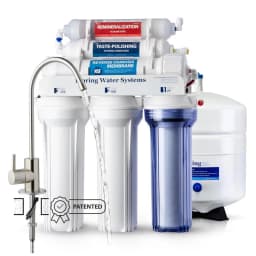
iSpring RCC7AK
under sink ro
$198
$81/yr filters
Price checked Apr 2026
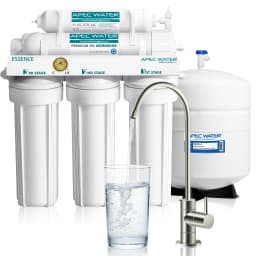
APEC ROES-50
under sink ro
$199.95
$75/yr filters
Price checked Apr 2026
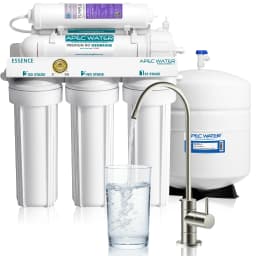
APEC ROES-PH75
under sink ro
$268.99
$95/yr filters
Price checked Apr 2026
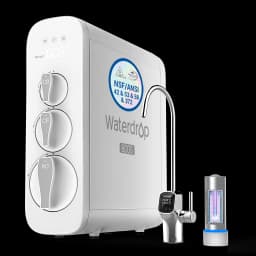
Waterdrop G3P800
under sink ro
$999
$166/yr filters
Price checked Sep 2026
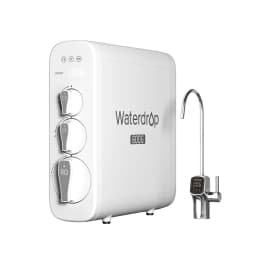
Waterdrop G3P600
under sink ro
$539
$155/yr filters
Price checked Sep 2026
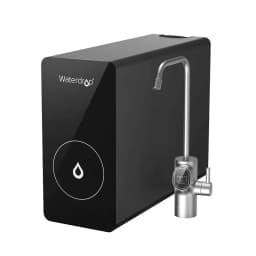
Waterdrop D6
under sink ro
$399
$100/yr filters
Price checked Sep 2026
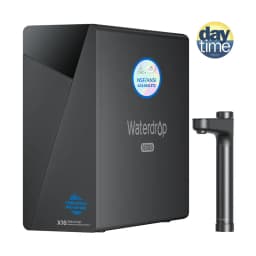
Waterdrop X16
under sink ro
$1999
$185/yr filters
Price checked Sep 2026
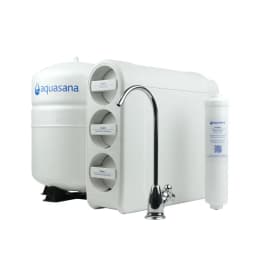
Aquasana SmartFlow Reverse Osmosis
under sink ro
$159.99
$340/yr filters
Price checked Sep 2026
Official Sources
Related Contaminants
Learn More
Check if TDS (Total Dissolved Solids) is in your water
Enter your ZIP code to see local water quality data and get matched with the right filter.
Enter Your ZIP Code →Informational guidance based on EPA data and NSF standards - not medical advice.