Sediment & Turbidity (Cloudy Water)
Category: inorganic
Cloudy, sandy, or gritty water is one of the most common well-water problems — and one of the most fixable. Most sediment is an aesthetic and equipment-protection issue rather than a health threat, but a sudden change in cloudiness is worth investigating, because particles can shield bacteria from disinfection. The fix is a sediment filter sized to the right micron rating.
EPA MCL
Not regulated
Status
Unregulated
NSF Standard
NSF/ANSI 42 (particulate reduction)
Health Effects
Sediment (suspended sand, silt, clay, or rust) and the cloudiness it causes — turbidity — are primarily an aesthetic and equipment issue, not a direct health hazard. The concern for well owners is indirect: suspended particles can shield bacteria and other pathogens from UV and chlorine disinfection, and a sudden increase in cloudiness can signal that surface water or contaminants are entering the well. Public water systems must keep turbidity very low under an EPA treatment-technique rule; private wells are not regulated.
Where It Comes From
Particles of sand, silt, clay, rust, or organic matter. Common sources: a new or recently serviced well, heavy rain or snowmelt, a failing or undersized well screen, a dropping water table that pulls in sediment, or corroding iron plumbing. Cloudiness that appears suddenly or after rain is worth investigating.
Where It's Commonly Found
Private wells — especially shallow, older, or newly drilled wells, and any well after heavy rain or recent work. Cloudiness that clears from the bottom up is usually air; cloudiness that settles as grit is sediment.
Among the most common private-well water-quality complaints. Private wells are not regulated under the Safe Drinking Water Act, so testing and treatment are the owner's responsibility.
How to Remove It
Effective Technologies
- mechanical filtration
- reverse osmosis
- ceramic
Does NOT Remove It
- UV
- water softener
- ion exchange
What's making my well water cloudy?
Cloudy water is suspended particles — sand, silt, clay, rust, or organic matter — that the well is drawing in. Common causes include a new or recently serviced well (it can take days to clear), heavy rain or snowmelt, a worn or undersized well screen, a dropping water table, or corroding iron plumbing adding rust. A quick test: fill a clear glass and let it sit. If it clears from the bottom up within minutes, it's harmless air bubbles; if particles settle as grit, it's sediment.
Cloudiness that appears suddenly, after heavy rain, or alongside a change in taste or smell deserves attention — it can indicate that surface water or other contaminants are reaching the well, so a bacteria test is wise in that case.
Is cloudy water dangerous?
Sediment itself is usually an aesthetic and mechanical problem, not a direct health hazard — but turbidity matters indirectly. Suspended particles can physically shield bacteria, viruses, and parasites from UV and chlorine disinfection, which is why turbidity is tightly controlled in public water systems. For private wells, a common guideline from extension services is that turbidity above about 5 NTU warrants being aware of possible bacterial contamination and testing accordingly. Sediment also wears out pumps, clogs fixtures, fouls softener resin, and shortens the life of RO membranes and other filters.
Choosing the right micron rating
Sediment filters are rated by micron size — the smaller the rating, the finer the particle they catch (and the faster they clog). The practical ladder: 50 micron catches coarse sand, 20 micron grit, 10 micron fine silt, 5 micron is the common all-purpose fine-sediment choice, and 1 micron is very fine (and clogs quickly). For heavy or mixed sediment, a multi-stage setup — a coarse 20-micron pre-filter followed by a 5-micron polishing filter — lasts far longer than a single fine filter. For continuous heavy loads, a backwashing media filter (such as Filter-Ag) replaces disposable cartridges.
Match the rating to your water: too coarse and cloudiness passes through; too fine and you'll replace clogged cartridges constantly. If you don't know your particle size, start with a 20-to-5-micron two-stage and adjust.
Where sediment filtration fits in the treatment train
Sediment removal almost always comes FIRST, at the point of entry, ahead of every other treatment stage. A sediment pre-filter protects softeners, iron filters, carbon, RO membranes, and especially UV systems — UV can't disinfect water it can't shine through, so a sediment (and often sub-5-micron) pre-filter is required before UV. Size the filter housing to your household's peak flow so it doesn't choke water pressure; our well-water planner and whole-house sizing tool can help you scope it.
Frequently Asked Questions
Why is my well water cloudy after rain?
Heavy rain or snowmelt can raise the water table and wash sediment or surface water toward the well, pulling in silt and clay that make the water cloudy. It often clears in a few days. Because rain can also carry bacteria into a vulnerable well, cloudiness after rain is a good reason to test for coliform bacteria as well as add sediment filtration.
Why did my well water suddenly turn cloudy?
Sudden cloudiness can mean a failing well screen, a dropping water table drawing in sediment, recent well or pump work, or surface water reaching the well after heavy rain. Because a sudden change can indicate contamination, it's worth testing for bacteria and checking the well — not just filtering — especially if taste or odor changed too.
What micron sediment filter do I need for well water?
For typical well sediment, a 5-micron filter is the common all-purpose choice; use 20 micron for coarse sand and 1 micron only for very fine silt (it clogs fast). For heavy or mixed sediment, run a two-stage setup — a 20-micron pre-filter into a 5-micron polishing filter — which lasts much longer than a single fine cartridge. If a UV system is downstream, you'll typically need a sub-5-micron pre-filter.
Is cloudy water safe to drink?
Sediment alone is usually an aesthetic issue, not a direct health risk. The concern is that cloudiness can shield bacteria and parasites from disinfection, and a sudden increase can signal contamination. Cloudy private-well water — especially above about 5 NTU, or after heavy rain — should be tested for bacteria before you assume it's only sediment.
Do I need a sediment filter before my water softener or UV?
Yes — sediment filtration goes first. A sediment pre-filter protects softener resin, RO membranes, and pumps from abrasion and clogging, and it is essential ahead of a UV system, because UV cannot disinfect water that particles keep it from penetrating. Put the sediment filter at the point of entry, before every other stage.
Cited Sources
- Turbidity (NTU): definition and measurement — U.S. EPA
- Turbidity and Your Private Well (B939) — University of Georgia Extension
- Domestic (Private) Supply Wells — USGS
- NSF/ANSI 42, 53 and 401: Filtration Systems Standards — NSF
Filters That Address Sediment & Turbidity (Cloudy Water)
6 filters in our database list Sediment & Turbidity (Cloudy Water) reduction.
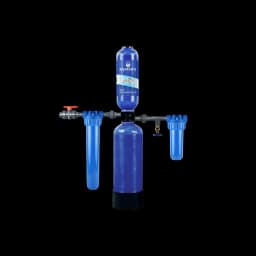
Aquasana Rhino WH-1000
whole house
$999
$148/yr filters
Price checked Sep 2026
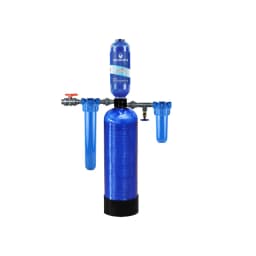
Aquasana Rhino Max Flow
whole house
$1399
$148/yr filters
Price checked Sep 2026
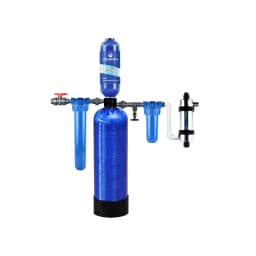
Aquasana Rhino Well Water with UV
whole house
$1749
$248/yr filters
Price checked Sep 2026
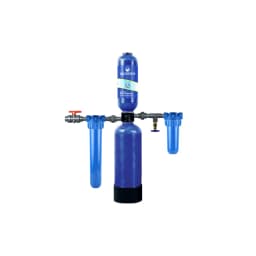
Aquasana Salt-Free Water Conditioner
whole house
$879
$148/yr filters
Price checked Sep 2026
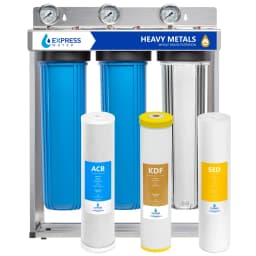
Express Water WH300SCKS
whole house
$548
$90/yr filters
Price checked Apr 2026
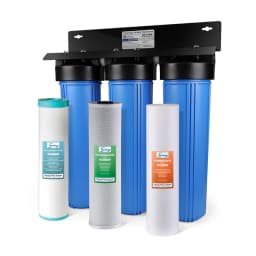
iSpring WGB32BM
whole house
$470
$130/yr filters
Price checked Jun 2026
Official Sources
Related Contaminants
Learn More
Check if Sediment & Turbidity (Cloudy Water) is in your water
Enter your ZIP code to see local water quality data and get matched with the right filter.
Enter Your ZIP Code →Informational guidance based on EPA data and NSF standards - not medical advice.